Waterline
AGOA VAI!
“Go down the tubes” on a journey through the history of sanitation in the city of Porto!
DID YOU KNOW?
Did you know that the expression “Agoa vai!” was shouted to warn people passing by on the street that waste water was about to be thrown out of the window of a house?
In the Middle Ages, there was no sewage system, only drainage for rainwater. Therefore, domestic waste water was thrown out onto the street from the windows of houses.
Later, in modern times, there were calhandreiras, women who disposed of the waste of the wealthier people, carrying it in a calhandro, a kind of tall basket, to the river.
ENGLISH SANITATION
It was not until the 19th century that the city of Porto had a sanitation network. In 1890, concerns and reflections arose about the problem that had been revealed, integrated sanitation, adopted until then by most cities. This mixed system was influenced by the Romans, but was highly dependent on rainy seasons, the slope of the land, and watercourses. It was known as the tout à l'égout system and was the most common in the late 19th century in cities such as London, Paris, Lisbon, and Porto. Its dependence on rainwater made this system ineffective.
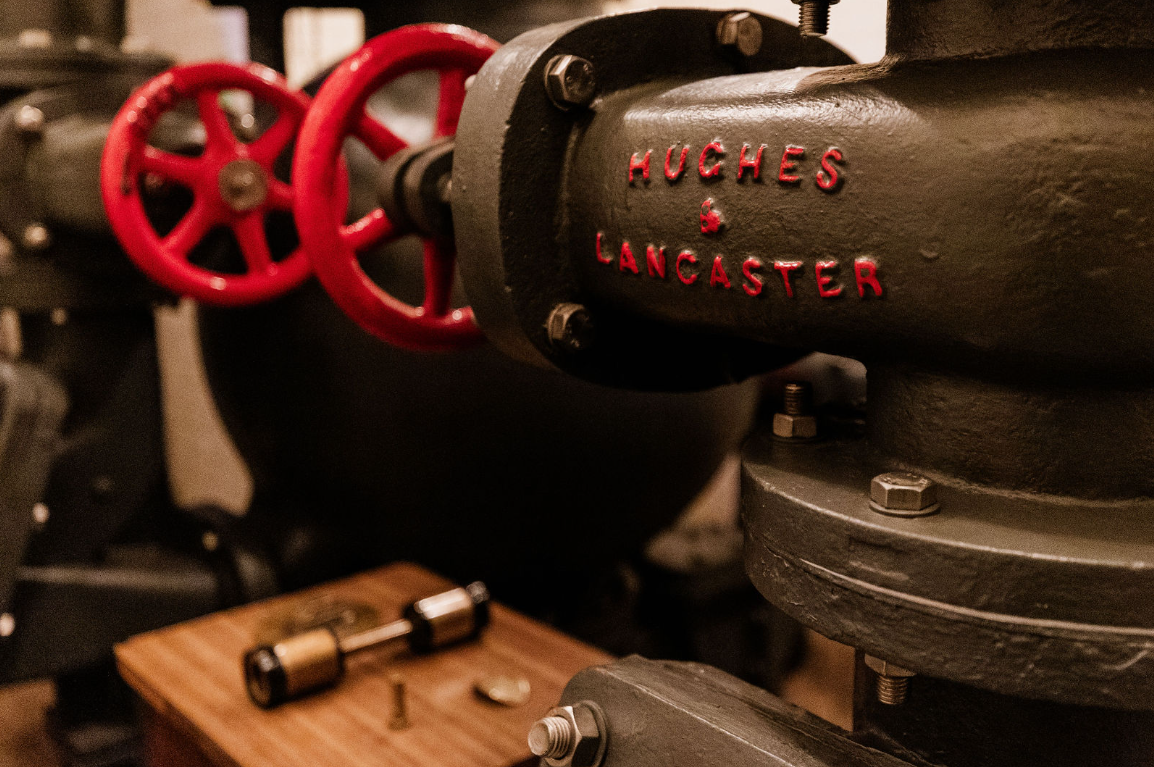
Following the publication in 1896 of a study on sanitation in the city by Ricardo Jorge, municipal doctor and head of the Hygiene Department, a call for tenders for the “Execution of sanitation works in the city of Porto” was published in the Government Gazette in 1897. Only the English company Hughes & Lancaster, based in Westminster, submitted a proposal to the Porto City Council. A project designed by engineers Shone and Ault for the “Sanitation of the city of Porto using a separate system with the use of Shone expellers in the lower areas of the city.” Work began on December 11, 1903, and continued until mid-1907. The area of the city covered in the first phase of these works, the “English phase,” corresponds to the entire waterfront between Praça da Ribeira, in the parish of São Nicolau, and Sobreiras, in Lordelo do Ouro, passing through the waterfront of Miragaia and Massarelos.
When the contract ended, the sanitation works were handed over to Portuguese contractors, the company Agostinho Rodrigues Monteiro, which signed a contract with the City Council on December 23, 1909, taking on the responsibility of resuming the work left by Hughes & Lancaster and making the domestic connections that were not part of the original 1903 contract. With the change of regime in 1910, the works were suspended for about six more years.
A new four-year contract with Hughes & Lancaster was signed on September 7, 1916, and the sanitation installation program in the city of Porto continued over the following decades, experiencing a new surge in the 1960s, which allowed for a further increase in the number of homes served by the sanitation network.
THE WEB
English engineers proposed the construction of a power plant in Sobreiras, where several steam compressors would generate compressed air that was channeled through iron pipes. When these entered the Shöne ejectors, they created enough pressure to expel the effluent. Eight Shöne ejectors were installed, and another was added after 1909. The Sobreiras Central Station generated energy and power for all the installed ejectors, with a mixed energy supply system consisting of an electric compressor and two steam compressors.
The system conveyed all the drained sewage to the Sobreiras Central Station for storage, which was then discharged at low tide so that it could flow into the sea, removing it from the Douro River. This was done through a main pipe, to which the various pipes conveyed the city's waste. It was built 1.30 meters above the average low tide level along its entire length. The part of the city above this collector is drained by gravity, and in the low-lying areas along the river, Shöne pneumatic expellers were built to lift the waste using compressed air supplied by the Sobreiras Plant. The expellers worked with compressed air, which at the time was supplied by steam compression machines operating at high pressure in the station. This site was chosen because it was close to the river, thus reducing the cost of transporting coal and other materials.
-
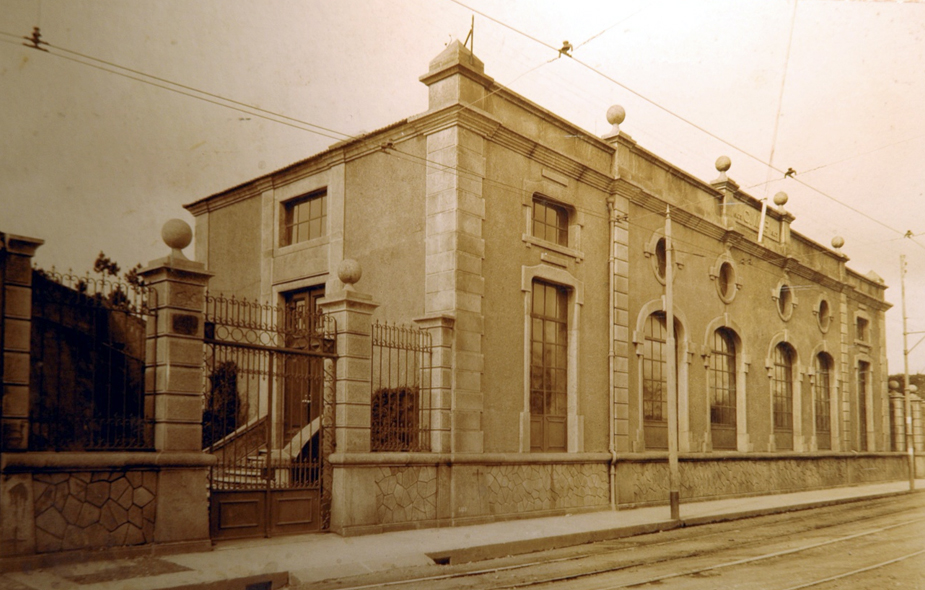
Sobreiras Power Station, 1929. AEdP Historical Archive.
-
![Machine room at the Sobreiras Power Station, [undated]. AEdP Historical Archive.](/imagens/galeria/slideshow_127_2.jpg)
Machine room at the Sobreiras Power Station, [undated]. AEdP Historical Archive.
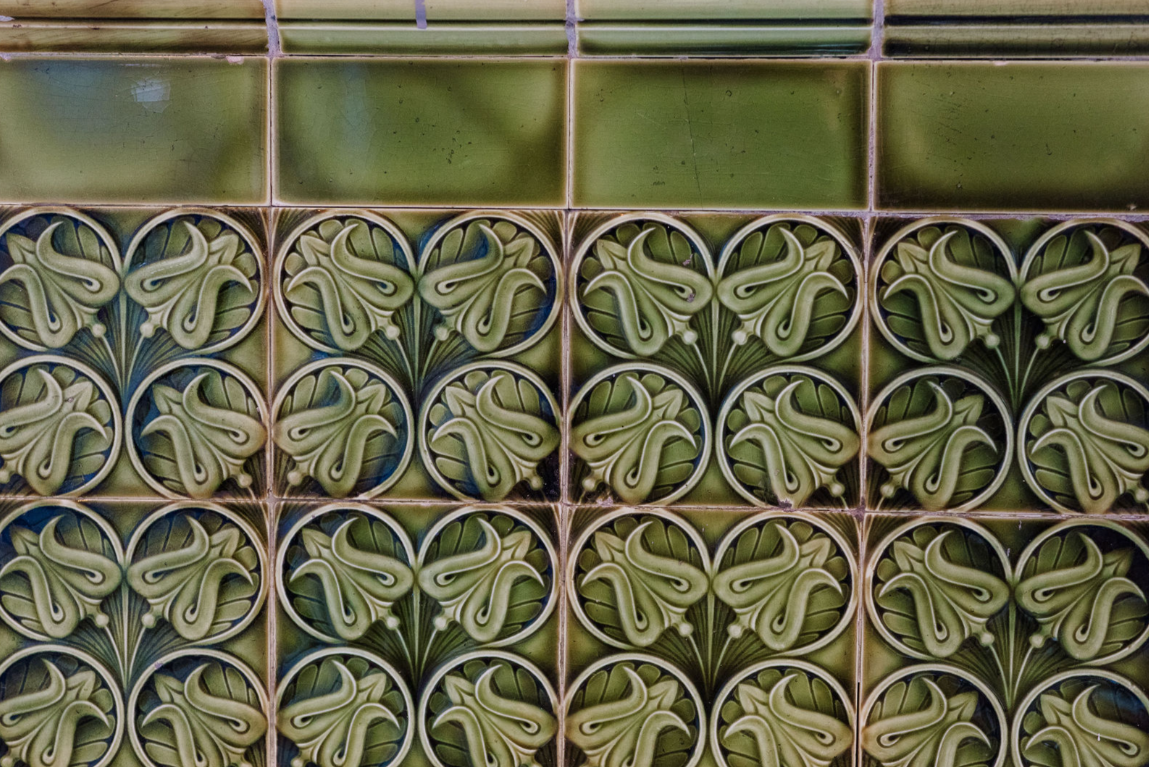
The architectural style of the Sobreiras Power Station is part of the transitional water architecture from the 19th-century steam power stations to the early 20th-century power stations. It is characterized by smaller-scale architecture that moves away from the classically inspired Waterworks Style and explores avant-garde art movements such as Art Nouveau and Art Deco. The station features Art Nouveau tile panels with a raised pattern. The station consisted of the engine room, boiler room, coal house, brick chimney, and tanks. The boiler room contained two cylindrical boilers with internal fires. The boilers were large and powerful enough to vaporize 400 kg of water per hour, raising it to a working pressure of 8 atmospheres. The water was supplied by feed pumps. The coal storage facility had a capacity of 50 tons, enough for two months.
This system operated until 2001, when the current Water Treatment Station was built.
THE SHÖNE SYSTEM
The industrial use of piped compressed air for power transmission was developed in the mid-19th century because, unlike steam, compressed air could be piped over long distances without losing pressure due to condensation.
Hughes & Lancaster took advantage of this and applied the Shöne system in Porto, which had been applied to the Houses of Parliament in Westminster – with pneumatic ejectors, automatic tanks, and air compressors.
The first Shöne pneumatic ejector was created in 1870 in England. This ejector was patented in 1878 by its creator, Isaac Shöne, and later, in the 1890s, exploited by the Hughes & Lancaster company, with engineers John Hughes and Charles Lancaster.
FUN FACTS
The sanitation system in the city of Porto, built by the English company, has been in operation for over a hundred years, albeit with some changes. This was the first system to be built from scratch, at national level, of the separate type, i.e., independent of the rainwater network!
During Carnival in 1905, a year after Hughes & Lancaster began work on the project, the first float alluding to the theme of sanitation appeared. It featured figures alluding to the policing of the various streets that had been closed due to the works and the resulting inconvenience caused to the daily lives of Porto's residents.
A SECRET
In some streets in the city of Porto, there are still manhole covers bearing the name of the English company Hughes & Lancaster.