Waterline
THE COMPANY'S WATER
Dive into the history of Porto's first domestic water supply system!
DID YOU KNOW?
The 19th century marked a paradigm shift in the history of water supply in the city of Porto, as it did in cities around the world, following the onset of the industrial era. The century was marked by the first domestic water supply system in the city of Porto, built by a French company.
THE FIRST PROPOSALS
It was in the second half of the century that the first proposals for the project emerged, the first being in 1856, presented by an English engineer, who proposed capturing water from the Leça River. In 1864, the innovative project by French engineer Eugène Henri Gavand gained the recognition of the mayor, but due to a lack of funds, it, like those that preceded it, was not implemented. Nevertheless, Gavand's study served as a reference for subsequent studies, including the proposal to collect water from the Sousa River in Gondomar, which was eventually implemented. In 1873, there was an attempt to create The Oporto Water Works Company Limited.
THE PROJECT
In the Government Gazette, No. 179, dated August 10, 1880, a tender was published for the contract to exploit, channel, and distribute water to the city. The only candidate was Compagnie Générale des Eaux pour l’Étranger, a French company based in Paris with experience in the field. The contract was signed on March 22, 1882. The system consisted of the Foz do Sousa Water Collection Center, the Jovim tunnel reservoir, the siphon bridge over the Rio Tinto, the Santo Isidro Reservoir, the Monte dos Congregados Reservoir, the São João da Foz Reservoir (da Pasteleira, now the – Porto Museum) and the Monumental Fountain (Fonte dos Leões). The Sousa Plant consisted of the Pumping and Pump Room, the Boiler Room, workshops, and warehouse, and outside, the chimney, the Chief's House (living quarters and office), and the weir and its floodgates. A transformer station was later built.
-
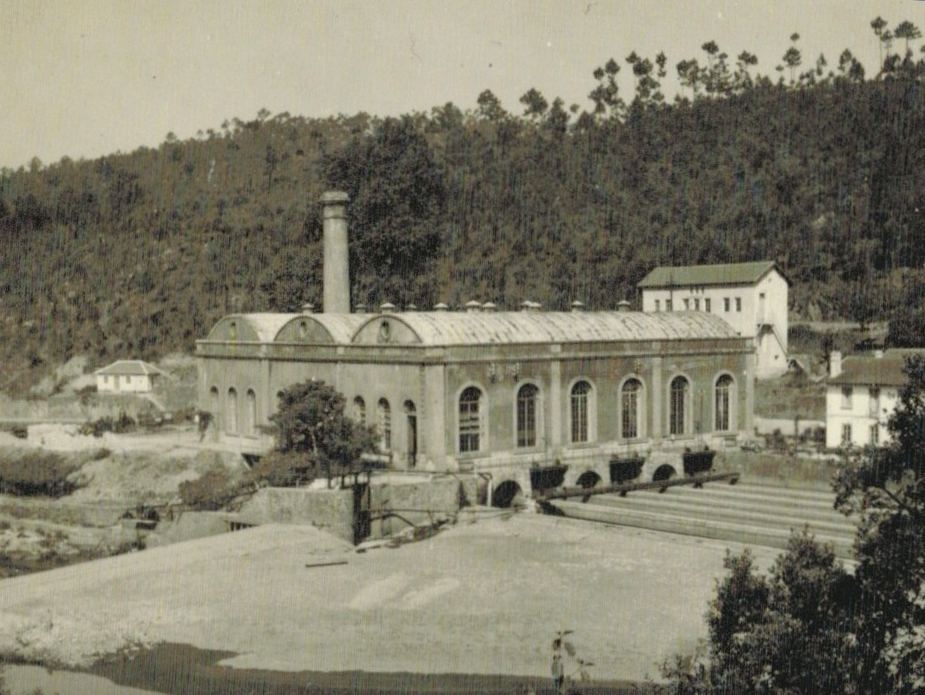
Foz do Sousa Water Collection, Filtration, and Elevation Plant (1886) in 1939, AEdP Historical Archive.
-
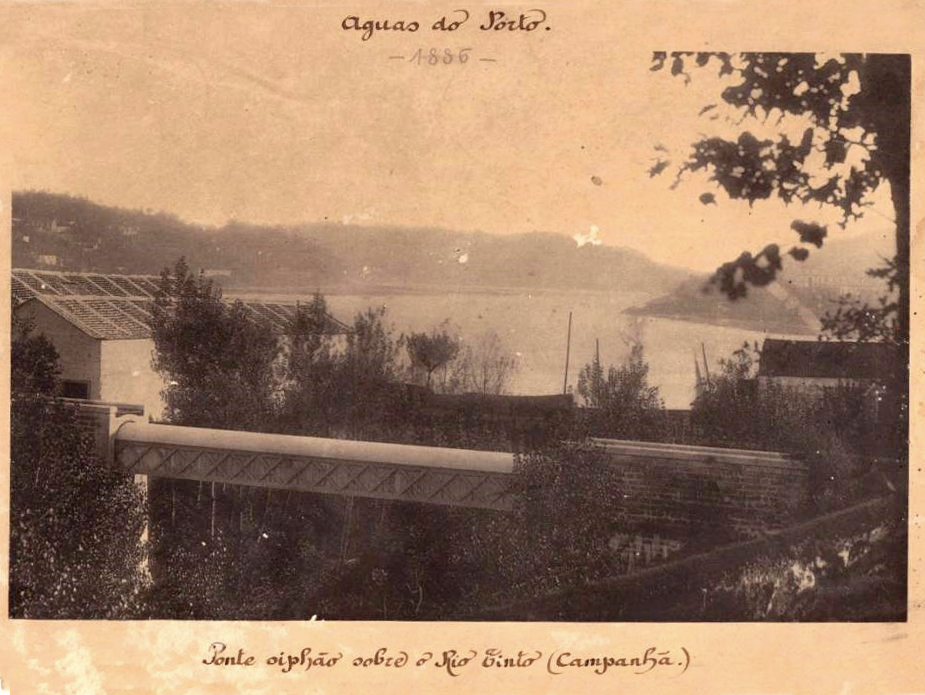
Siphon bridge over the Rio Tinto, 1886. AEdP Historical Archive.
-
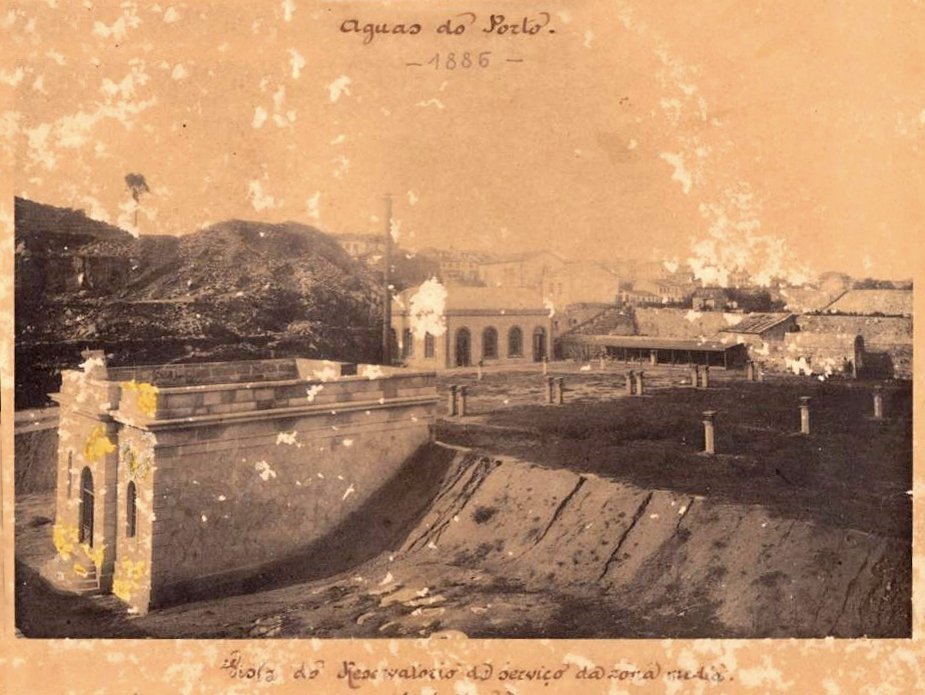
Santo Isidro Reservoir, 1886. AEdP Historical Archive.
-
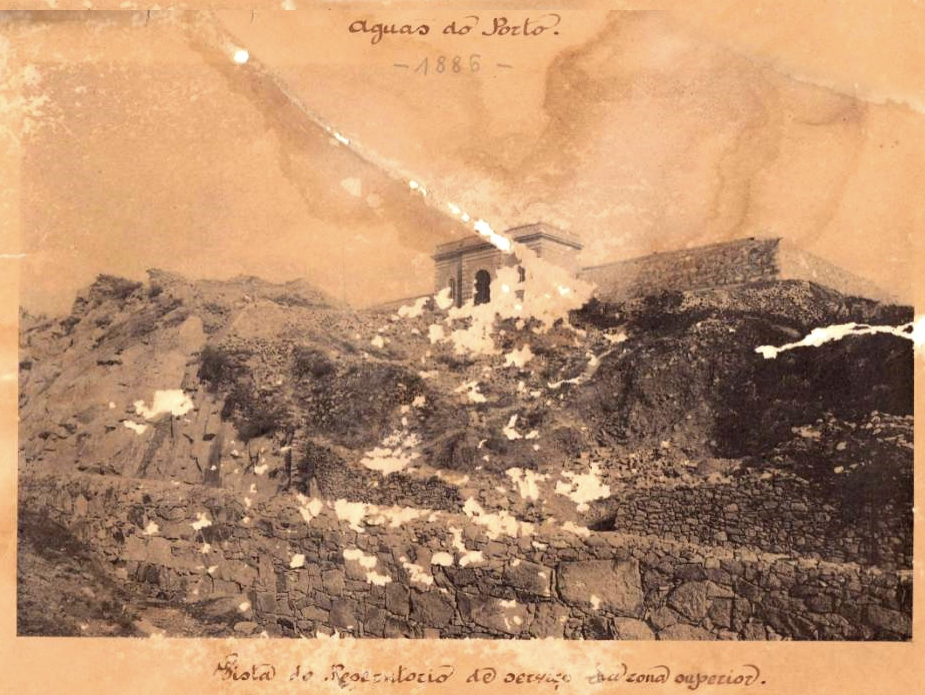
Monte dos Congregados Reservoir, 1886. AEdP Historical Archive.
-
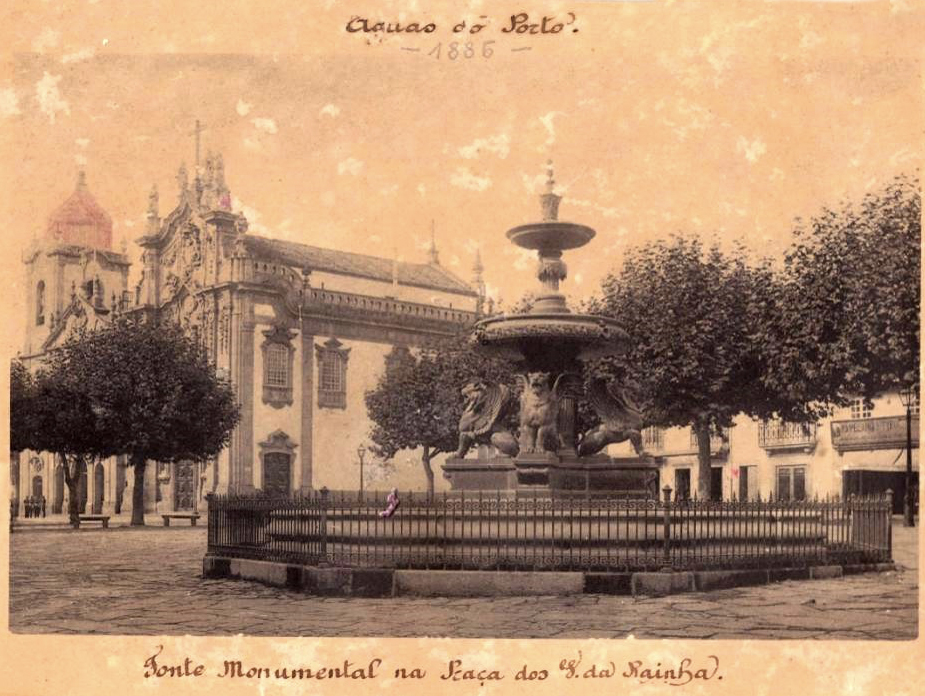
Monumental Fountain, 1886. Historical Archive of the AEdP.
The project was designed by Max Schmidt, principal engineer, and Gustave Marchand, chief engineer of Ponts et Chaussées de France, the Inspector General and the Director General of the Compagnie, respectively. Working under their orders were Justo Fernandes, Alexandre de Saldanha da Gama, and Eduardo Lobo de Castello Branco, heads of the 1st, 2nd, and 3rd sections, as well as Ernest Ringuier from the materials division and Cesar Goulard from the technical department. The construction of the entire system was the responsibility of Casa Delune de Paris, under the direction of two French technicians, Louis Roustan and Celestin Viallet, as chief and deputy chief of works. Studies began in July 1882 and construction work in March 1884. In June 1886, water from the Sousa River entered the city of Porto and regular operation began on January 1, 1887.
The Compagnie was the concessionaire of the water supply system until April 1, 1927, when SMAS - Serviços Municipalizados de Águas e Saneamento do Porto (Porto Municipal Water and Sanitation Services) was created.
THE SYSTEM
Sousa Central: collection, filtration, and elevation of water from the Sousa River
Santo Isidro Reservoir: received water from Sousa Central and supplied the central area of the city
Monte dos Congregados Reservoir: received water from the Santo Isidro Reservoir and supplied the upper area of the city
Monumental Fountain: this was the meeting point of the pipeline connecting the Santo Isidro Reservoir and the São João da Foz Reservoir, regulating pressure and oxygenating the water
São João da Foz Reservoir: received water from the Monumental Fountain and supplied the lower part of the city
THE COMPAGNIE
On December 14, 1853, Napoleon III authorized the creation of the Compagnie Générale des Eaux. It won its first public service water distribution concession in the city of Lyon. Other French cities followed, including Nantes, Nice, and Paris. 1880 was the year the Compagnie established itself outside France, marking the beginning of its international expansion, first in Venice, then in Constantinople and Porto. In 1884, in Reims, it expanded its activities to include wastewater treatment for the first time. By 1898, it was operating in Venice, Bergamo, La Spezia, Verona, and Porto, with future projects planned for Lausanne, Naples, and Constantinople.
THE TASTE OF WATER
Despite advances towards drinking water, the “company water” was not easily accepted by the people of Porto: it was the taste of the water that was the problem. The taste of water from a well or a spring is different from the taste of water from a river. The people of Porto complained about the “lack of taste” and associated it with poor water quality. Faced with discontent, most people continued to get their water from wells and public fountains, even though the water carriers' service had undergone changes, as established in the contract with the Company. 10th condition of the contract: 3rd:
“Once the company has established its service, the water carriers will no longer have the right to draw water from public fountains to sell, and for this purpose they may only obtain it from the company's sales fountains, paying the price charged to private individuals.”
NOWADAYS
Currently, only the Santo Isidro Reservoir is active, preserving its original form and function. The Fonte dos Leões is active, but has undergone changes over time, which have modified the water reception tank, the underground maneuvering chamber, which allowed the management of the pipes through taps and valves, and also its hydraulic system. The Monte dos Congregados Reservoir was demolished for the construction of new circular reservoirs in 1957. The São João da Foz Reservoir was rehabilitated and reused as a museum space and, since 2019, has been one of the centers of the Porto Museum network. The Sousa Power Plant is also planned to be reused for educational purposes. The Jovim tunnel-reservoir was expanded into a reservoir in the 1940s and a water treatment plant was built.
-
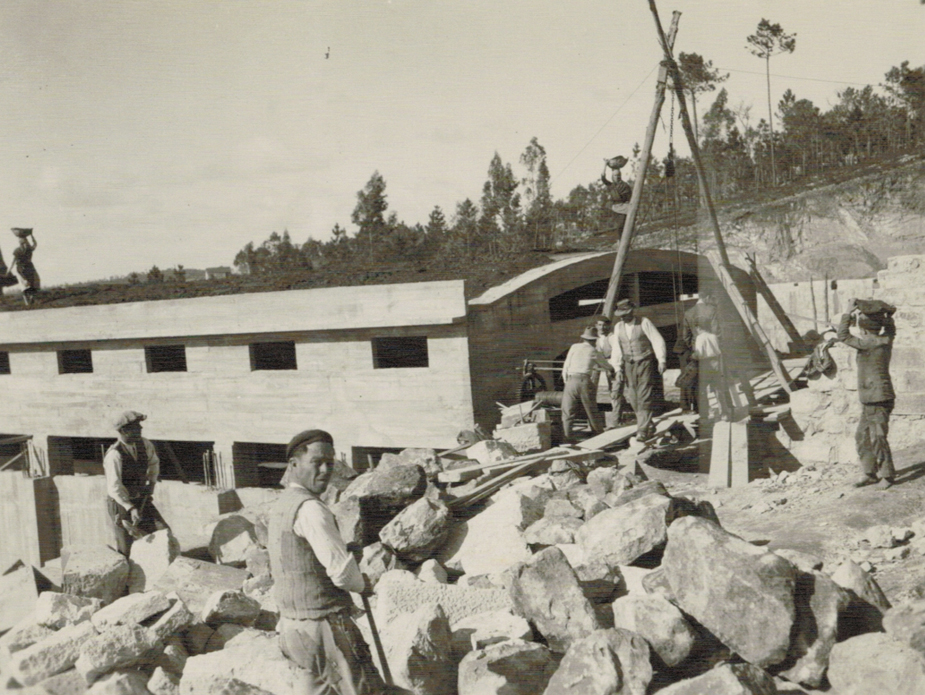
Construction of the Jovim Reservoir, 1941. AEdP Historical Archive.
-
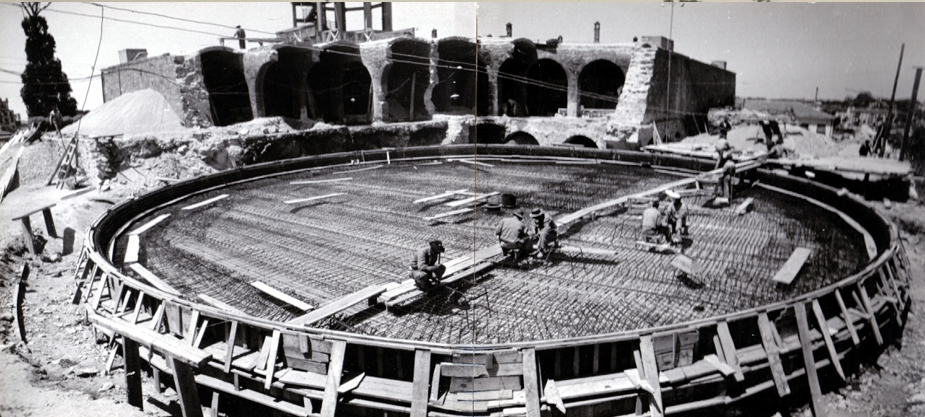
Demolition of the Monte dos Congregados reservoir tank and construction of circular reservoirs, 1957. AEdP Historical Archive.
A CURIOSITY
The memory of the French Company has been preserved in the expression that the people of Porto still use today to refer to tap water: “água da Companhia” (water from the Company).