
The miracle behind the Fonte da Senhora de Campanhã
During a long period of extreme drought that threatened to bring famine to the people and animals of Campanhã, help was sought from the patron saint of Campanhã. In 1772, the community launched a procession in her honor to appeal to the saint's mercy. During the procession to ask for rain, the image of Nossa Senhora (Our Lady) fell from the platform and broke a hand. The community was surprised to see water springing from the spot where the saint's hand had fallen, on Rua de Bonjóia. It became known as the “Miracle of Our Lady of Campanhã”( and a public fountain was built there. Today, there is still a public fountain on the same street, known as Fonte de Bonjóia or Fonte da Senhora. The divine event was marked by the construction of a commemorative column symbolizing the miracle, which contains the following inscription at its base:
0"IN MEMORY OF OUR LADY OF CAMPANHÃ IN RECOGNITION OF THE GREAT DROUGHT THAT OCCURRED IN MARCH OF THE YEAR 1772. ON MARCH 23, 1772, OUR LADY OF CAMPANHÃ WENT IN PROCESSION TO SPOR BECAUSE OF THE GREAT DROUGHT THAT OCCURRED THAT YEAR ON THE OCCASION WHEN OUR LADY RETURNED TO (south side of the plinth)
THE CHURCH CAHIO HERE THE ANDOR BEATING S. WITH HIS HOLY LEFT ARM ON THE ROCK IN FRONT OF IT, BREAKING TWO FINGERS. WATER BEGAN TO SPRING FORTH, WHICH IS STILL MENTIONED TODAY. THE DEVOTES JOÃO COELHO DA ROCHA AND JOSÉ PEREIRA CAMPOS HAD THIS HUMBLE MONUMENT PLACED IN RECOGNITION SUCH A GREAT MIRACLE." (west side of the plinth)
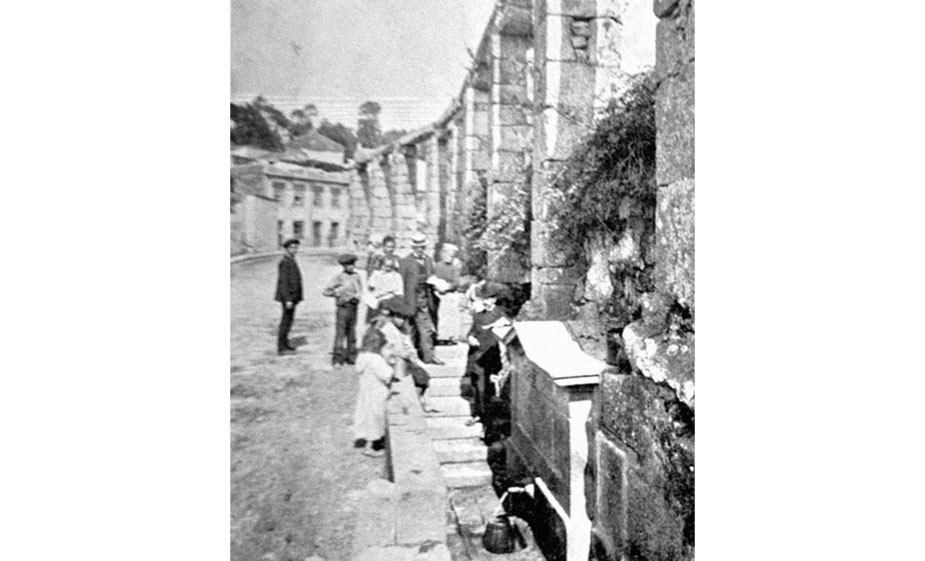
Fonte da Bonjóia in 1908
Later, in the second half of the 20th century, a chapel was built in honor of Our Lady of Campanhã, who was remembered there as “Our Lady of the Spring.” Where the chapel was built, there used to be washing tanks.
The image of Our Lady of Campanhã was kept for many years in a small niche attached to the commemorative column. Today it can be visited in the Parish Church. Considered one of the most beautiful images of the Virgin in the Diocese of Porto, it is a piece carved in limestone, upholstered and polychromed, of French influence and attributed to the 14th century.
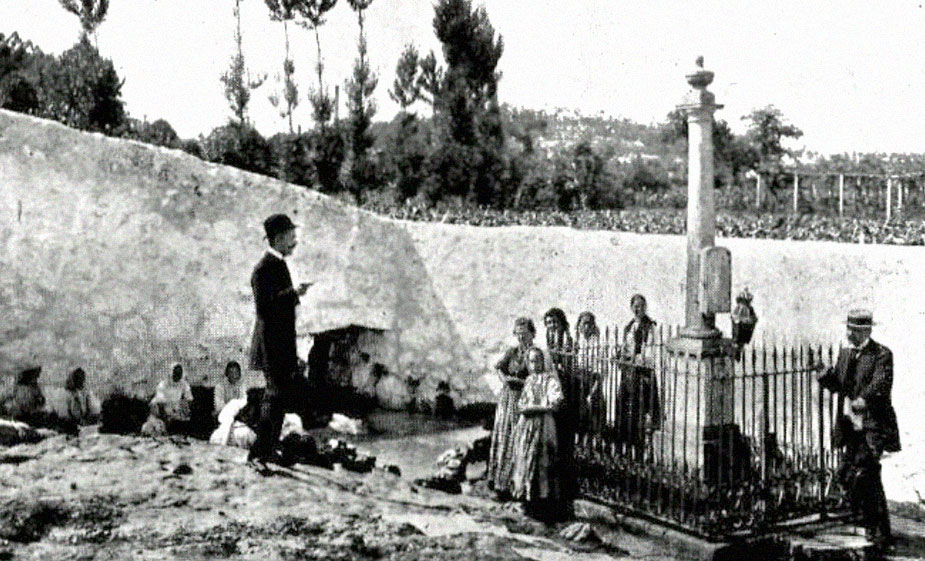
Column and washbasins in 1908.
Next to the fountain is an aqueduct, or what remains of it after the construction of the VCI, which once distributed water to the area and probably to Quinta da Bonjóia with water coming from a mine located on the current grounds of Campanhã Station.
0"IN MEMORY OF OUR LADY OF CAMPANHÃ IN RECOGNITION OF THE GREAT DROUGHT THAT OCCURRED IN MARCH OF THE YEAR 1772. ON MARCH 23, 1772, OUR LADY OF CAMPANHÃ WENT IN PROCESSION TO SPOR BECAUSE OF THE GREAT DROUGHT THAT OCCURRED THAT YEAR ON THE OCCASION WHEN OUR LADY RETURNED TO (south side of the plinth)
THE CHURCH CAHIO HERE THE ANDOR BEATING S. WITH HIS HOLY LEFT ARM ON THE ROCK IN FRONT OF IT, BREAKING TWO FINGERS. WATER BEGAN TO SPRING FORTH, WHICH IS STILL MENTIONED TODAY. THE DEVOTES JOÃO COELHO DA ROCHA AND JOSÉ PEREIRA CAMPOS HAD THIS HUMBLE MONUMENT PLACED IN RECOGNITION SUCH A GREAT MIRACLE." (west side of the plinth)
Fonte da Bonjóia in 1908
Later, in the second half of the 20th century, a chapel was built in honor of Our Lady of Campanhã, who was remembered there as “Our Lady of the Spring.” Where the chapel was built, there used to be washing tanks.
The image of Our Lady of Campanhã was kept for many years in a small niche attached to the commemorative column. Today it can be visited in the Parish Church. Considered one of the most beautiful images of the Virgin in the Diocese of Porto, it is a piece carved in limestone, upholstered and polychromed, of French influence and attributed to the 14th century.
Column and washbasins in 1908.
Next to the fountain is an aqueduct, or what remains of it after the construction of the VCI, which once distributed water to the area and probably to Quinta da Bonjóia with water coming from a mine located on the current grounds of Campanhã Station.