
Chafariz do Laranjal, traveler through space and time
It is believed to have been built with stones from the old Largo de São Domingos fountain, built in the square of the same name, at the end of Rua das Flores, in 1544. The old fountain occupied the center of the square and was demolished when it was replaced by the now defunct Fonte de São Domingos, with its monumental back, built in the wake of the Almada projects and inaugurated in 1849.
It is a granite fountain, the only example of this type of bowl fountain in the city's public spaces. Its composition is based on two main planes consisting of a circular tank with smooth sides and a square plinth with framed sides decorated with raised finials supporting a fluted column. Above this is a larger circular bowl decorated with an Ionic denticle frieze and an inscription engraved in Latin, from which the word COMMVNI stands out. On a regular plinth stands a fluted column supporting the smaller bowl, which replicates the decorative program of the larger one; from this emerges a fountain, added later.
Contemporary accounts of the fountain's reconstruction indicate that some of the 16th-century elements were reused. The bowls appear to belong to the original construction, due to their design alluding to the classical Ionic order and the prevailing Roman taste, and the inscription referring to the fountain's community use (COMMVNI), the basic precept behind its creation in Largo de São Domingos. Descriptions of its original appearance indicate the existence of a support column, two bowls with four spouts each, and a tank with curvilinear shapes. Its authorship is attributed to master mason João Lopes, the Elder, who had a workshop in Ponte de Lima and was the creator of another example of a bowl fountain in Porto, preserved in Parque das Águas, the Chafariz do Convento de São Bento de Avé Maria, also dating from the 16th century.
It was supplied with water from the former Convent of São Domingos, built in the 13th century in the same square. In a letter from King João III, dated February 28, 1545, there is mention of a fountain next to the convent for the private use of the complex. In the letter, the monarch mentions the replacement of the fountain with a new one, São Domingos, built in 1544 by the Porto City Council, using the profits from the Salt Tax, which were also used to renovate the pipes coming from the Convent of São Bento de Avé Maria that ran through the newly opened Rua das Flores. The water for the fountain was supplied by the Dominicans, who imposed the conditions that it be named Chafariz de São Domingos and display the Order's coat of arms.
Later, in the 17th century, motivated by the construction of the Manancial de Paranhos, whose aqueduct ended at the Chafariz do Olival, from where the water was conducted to the Chafariz de São Domingos and from there to Rua Nova. The contract for this pipeline included alterations to the fountains of São Domingos and Rua Nova (Congostas), and the Dominican coat of arms was removed from the former. The chafariz de São Domingos was now fed by water from Paranhos, leaving the Dominicans' jurisdiction.
In the 18th century, changes were made by the Public Works Board with the Almadas family, such as the opening of Rua de São João, the abolition of religious orders that deactivated the convent and its subsequent purchase by Banco de Lisboa, and the regularization of Rua das Flores, which led to the removal of the fountain from the square in 1845.
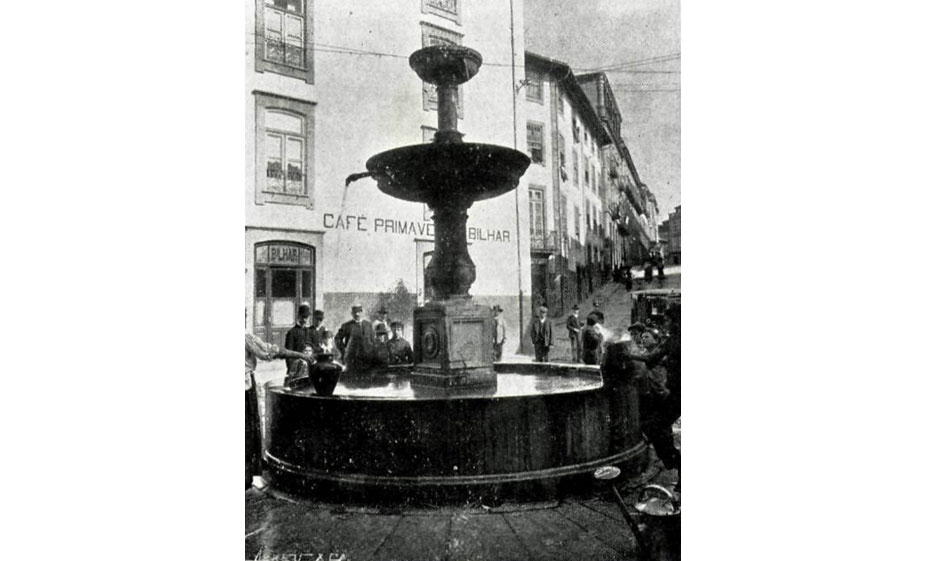
Chafariz do Laranjal in Largo do Laranjal, 1909.
As a result of the same projects, Praça dos Laranjais was demarcated in 1770, to where the fountain was moved in 1854. In turn, it replaced the fountain designed for that square and inaugurated in 1844. The old fountain was renamed Chafariz do Laranjal in the new square. It remained in that location, fed by water from the Manancial de Camões spring. It was later removed from Praça do Laranjal as a result of Barry Parker's project, later transformed by Marques da Silva, for Avenida dos Aliados, which envisaged a new municipal building, begun in 1920 but only finally completed in 1957.
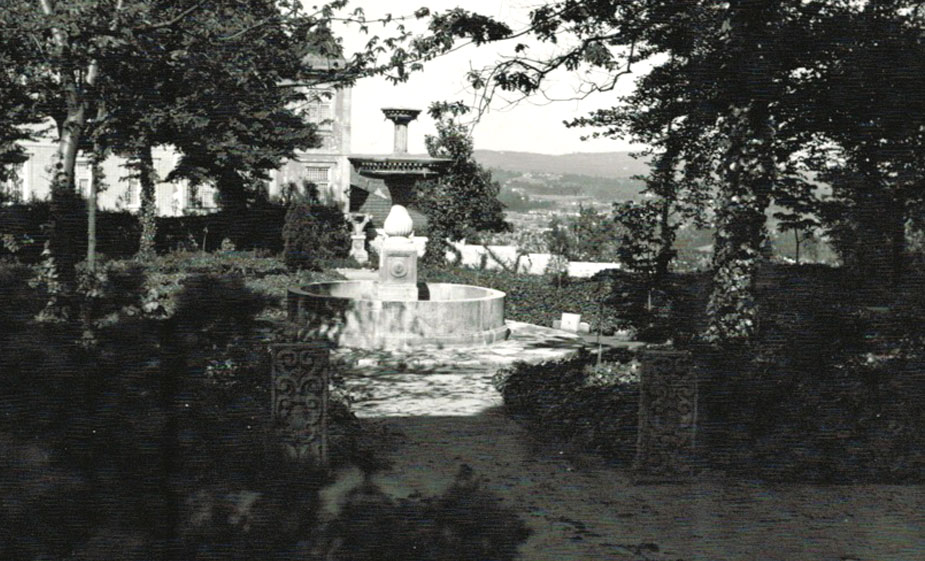
Chafariz do Laranjal in Parque das Águas, c.1940.
The fountain was therefore moved again and placed in the gardens of the Municipal Water and Sanitation Services on Rua Barão de Nova Sintra. Meanwhile, a simple tank was installed in Praça da Trindade, which in 1972 was replaced by the Laranjal Fountain, which was rebuilt in its place.
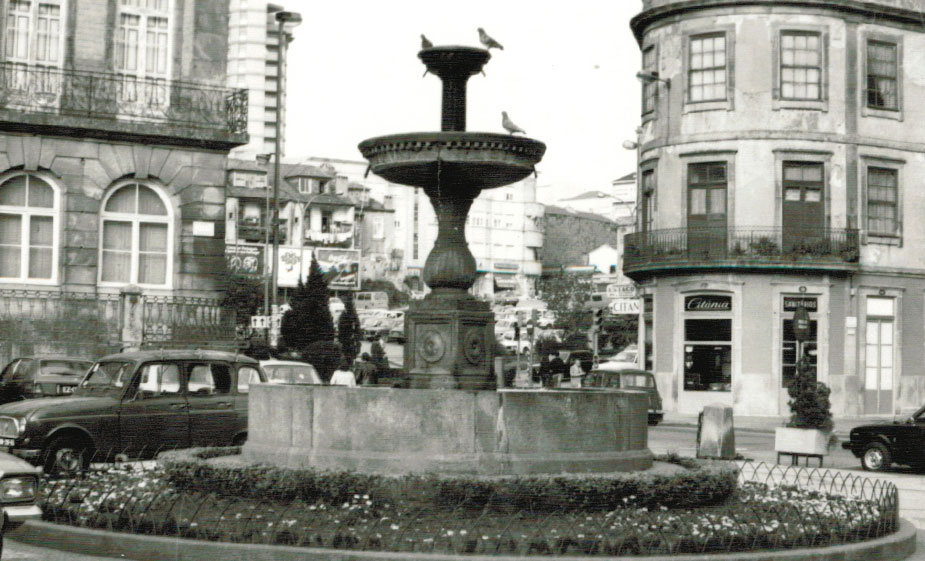
Chafariz (Fountain) in Largo da Trindade, 1983.
To learn more about master João Lopes, click here.
It is a granite fountain, the only example of this type of bowl fountain in the city's public spaces. Its composition is based on two main planes consisting of a circular tank with smooth sides and a square plinth with framed sides decorated with raised finials supporting a fluted column. Above this is a larger circular bowl decorated with an Ionic denticle frieze and an inscription engraved in Latin, from which the word COMMVNI stands out. On a regular plinth stands a fluted column supporting the smaller bowl, which replicates the decorative program of the larger one; from this emerges a fountain, added later.
Contemporary accounts of the fountain's reconstruction indicate that some of the 16th-century elements were reused. The bowls appear to belong to the original construction, due to their design alluding to the classical Ionic order and the prevailing Roman taste, and the inscription referring to the fountain's community use (COMMVNI), the basic precept behind its creation in Largo de São Domingos. Descriptions of its original appearance indicate the existence of a support column, two bowls with four spouts each, and a tank with curvilinear shapes. Its authorship is attributed to master mason João Lopes, the Elder, who had a workshop in Ponte de Lima and was the creator of another example of a bowl fountain in Porto, preserved in Parque das Águas, the Chafariz do Convento de São Bento de Avé Maria, also dating from the 16th century.
It was supplied with water from the former Convent of São Domingos, built in the 13th century in the same square. In a letter from King João III, dated February 28, 1545, there is mention of a fountain next to the convent for the private use of the complex. In the letter, the monarch mentions the replacement of the fountain with a new one, São Domingos, built in 1544 by the Porto City Council, using the profits from the Salt Tax, which were also used to renovate the pipes coming from the Convent of São Bento de Avé Maria that ran through the newly opened Rua das Flores. The water for the fountain was supplied by the Dominicans, who imposed the conditions that it be named Chafariz de São Domingos and display the Order's coat of arms.
Later, in the 17th century, motivated by the construction of the Manancial de Paranhos, whose aqueduct ended at the Chafariz do Olival, from where the water was conducted to the Chafariz de São Domingos and from there to Rua Nova. The contract for this pipeline included alterations to the fountains of São Domingos and Rua Nova (Congostas), and the Dominican coat of arms was removed from the former. The chafariz de São Domingos was now fed by water from Paranhos, leaving the Dominicans' jurisdiction.
In the 18th century, changes were made by the Public Works Board with the Almadas family, such as the opening of Rua de São João, the abolition of religious orders that deactivated the convent and its subsequent purchase by Banco de Lisboa, and the regularization of Rua das Flores, which led to the removal of the fountain from the square in 1845.
Chafariz do Laranjal in Largo do Laranjal, 1909.
As a result of the same projects, Praça dos Laranjais was demarcated in 1770, to where the fountain was moved in 1854. In turn, it replaced the fountain designed for that square and inaugurated in 1844. The old fountain was renamed Chafariz do Laranjal in the new square. It remained in that location, fed by water from the Manancial de Camões spring. It was later removed from Praça do Laranjal as a result of Barry Parker's project, later transformed by Marques da Silva, for Avenida dos Aliados, which envisaged a new municipal building, begun in 1920 but only finally completed in 1957.
Chafariz do Laranjal in Parque das Águas, c.1940.
The fountain was therefore moved again and placed in the gardens of the Municipal Water and Sanitation Services on Rua Barão de Nova Sintra. Meanwhile, a simple tank was installed in Praça da Trindade, which in 1972 was replaced by the Laranjal Fountain, which was rebuilt in its place.
Chafariz (Fountain) in Largo da Trindade, 1983.
To learn more about master João Lopes, click here.